 SWINE
SWINE Pork Market Outlook August 2026

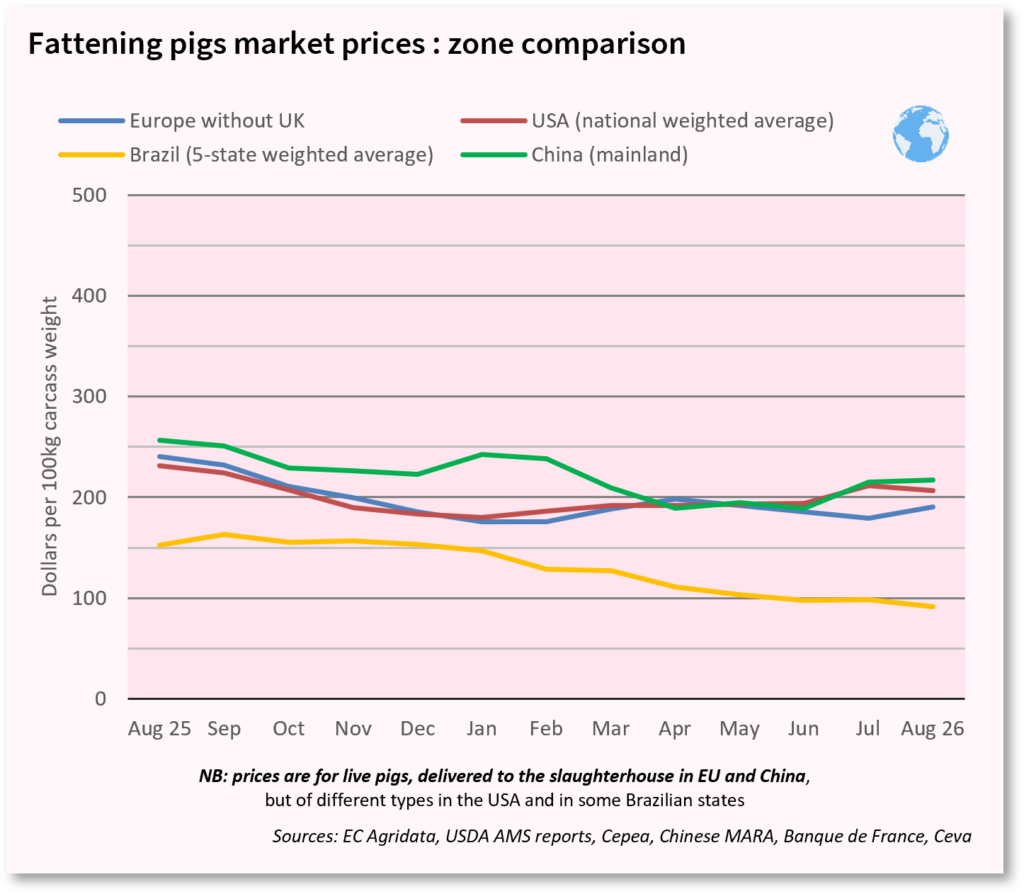
Pork markets showed mixed trends in July and August 2026. European prices fell in July before recovering in August, while China’s strong July rebound subsequently lost momentum. US prices also reversed in August, whereas the Brazilian market remained under sustained downward pressure.
The prolonged heatwave slowed pig growth and reduced carcass weights, tightening slaughter pig supplies across Europe. At the same time, weak meat sales, high stocks and limited export opportunities affected European prices. Across the main producing markets, supply conditions, domestic demand and international trade remained key factors influencing pork meat prices.
What happened to the European pork meat market in July and August?
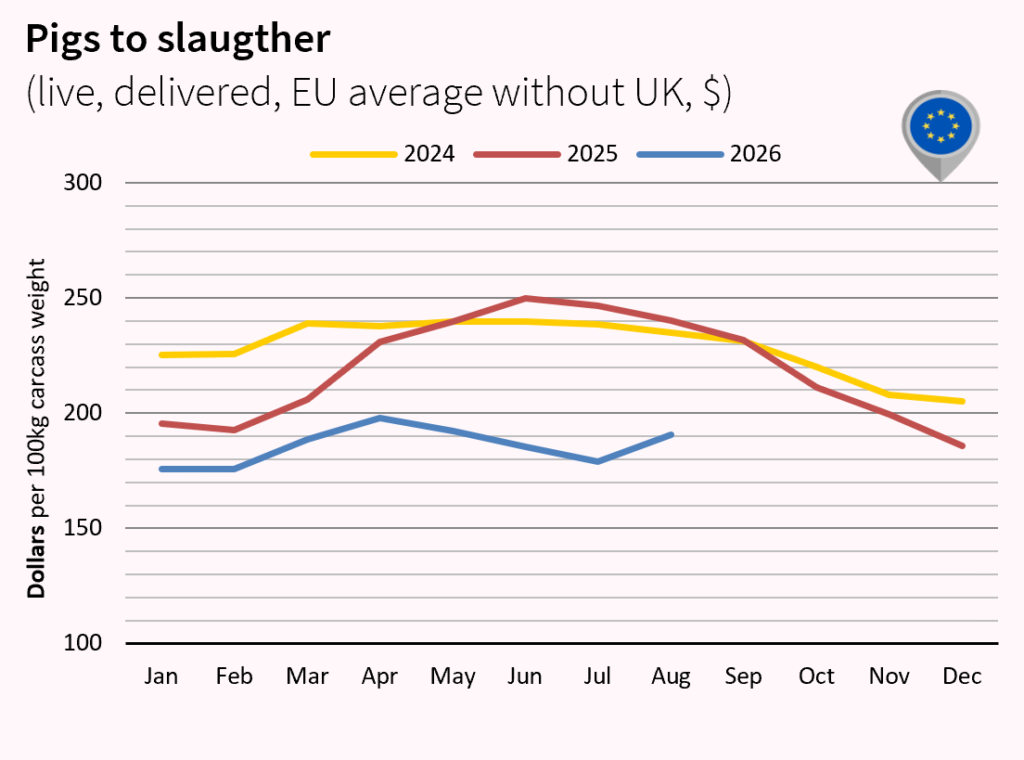
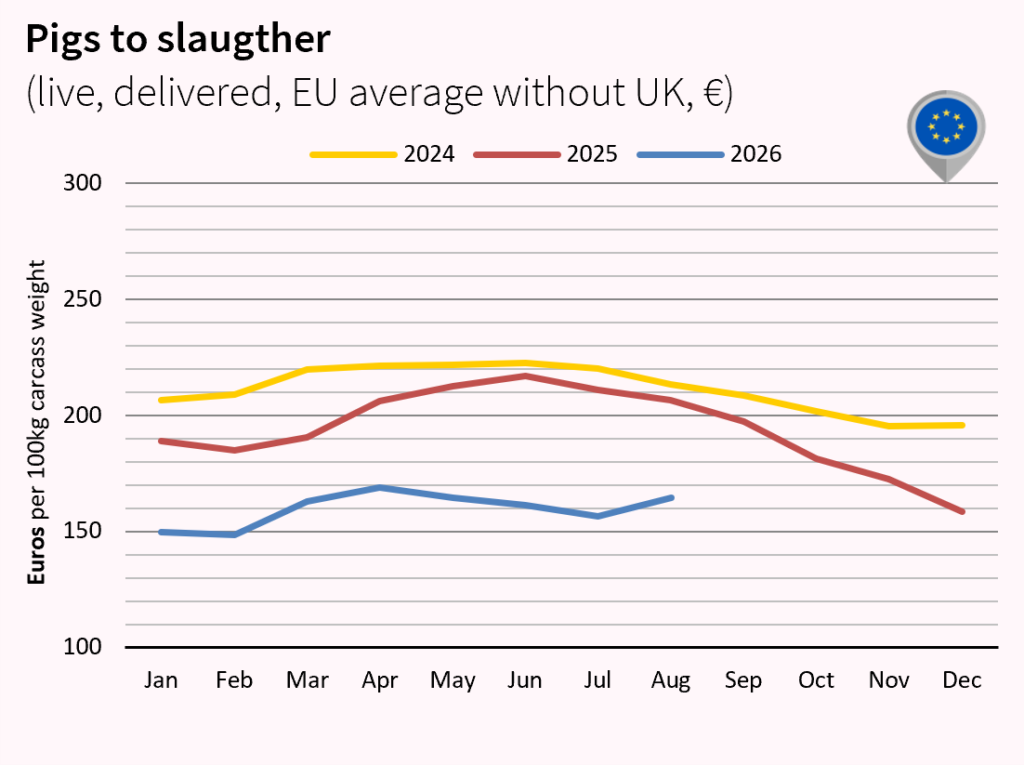
The prolonged heatwave slowed pig growth and reduced carcass weights, tightening slaughter pig supplies across Europe. But weak meat sales, high stocks and limited export opportunities pushed the European Class E price down 3.9% in July. Prices rebounded 6.4% in August as post-holiday demand improved and pig shortages intensified.
France prices rose supported by a 1.7 kg monthly decline in carcass weights and lower slaughter volumes. Spanish prices increased as hot weather constrained supply and tourism boosted consumption. Export-oriented countries faced strong competition from Brazil and the USA, and weak Asian demand.
How did US pork meat prices and production evolve?
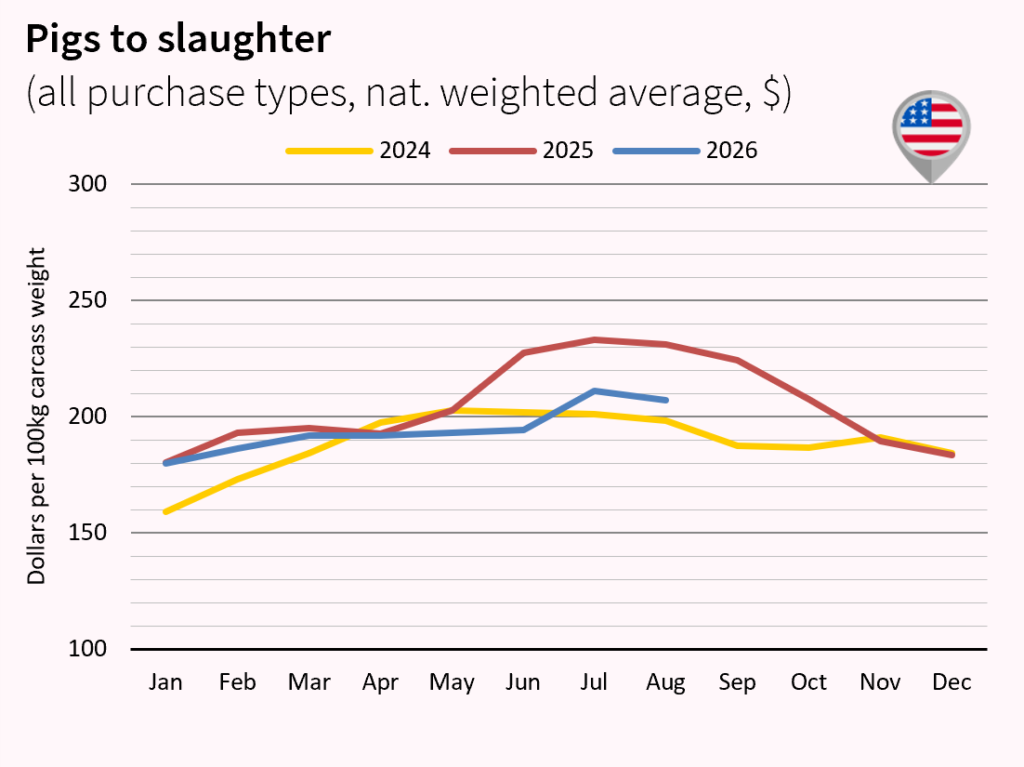
US hog prices recovered through July but remained well below year-earlier levels before dropping sharply in August. First-half 2026 pork production rose slightly as moderate feed costs encouraged heavier pigs, lifting average carcass weights by 0.7% year on year.
Exports remained strong, with first-half volumes up 4.1%, although second-quarter shipments to Mexico weakened amid stronger Canadian and Brazilian competition. July refrigerated pork stocks increased 9.4%, particularly for bacon and ham, further signalling weaker domestic and international demand than the previous summer.
Why did Brazilian pork meat prices remain under pressure?
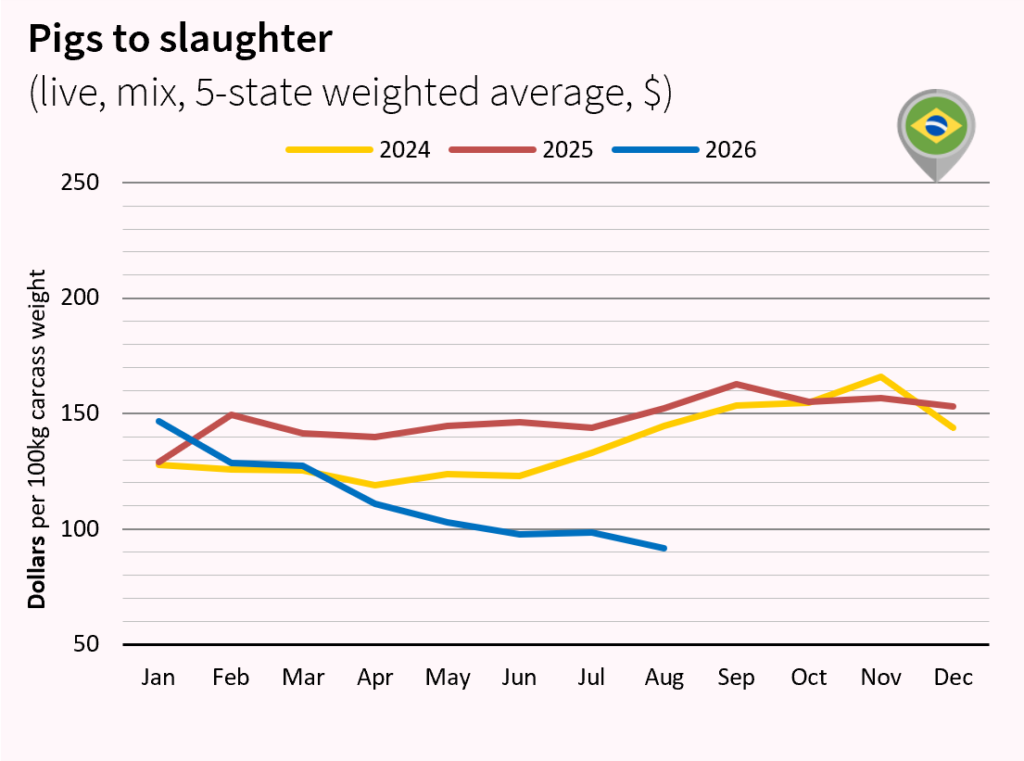
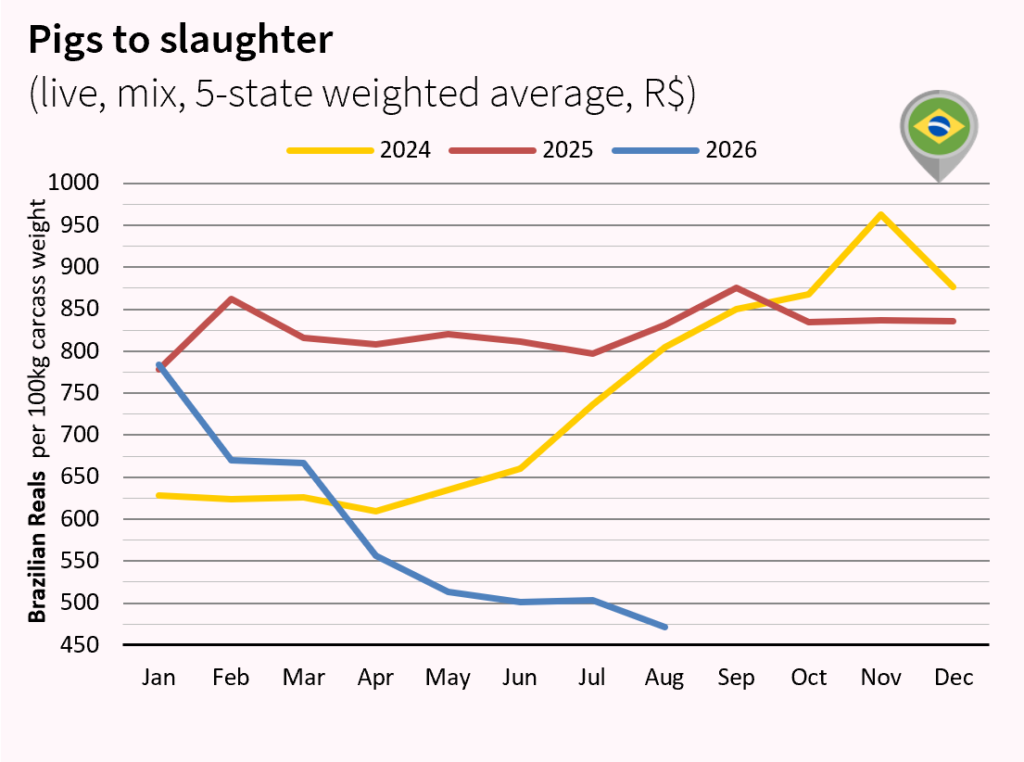
Brazilian pork prices extended their six-month decline through July and August amid weaker domestic and export demand, exacerbated by the school holiday period.
Investments made in 2025 boosted 2026 production and domestic availability, with first-half pig slaughter up 4.3% year on year, widening the supply-consumption imbalance.
Export markets were unable to fully absorb the additional output, leaving the market oversupplied and prices under sustained pressu.
What happened to Chinese pork meat prices in July and August?
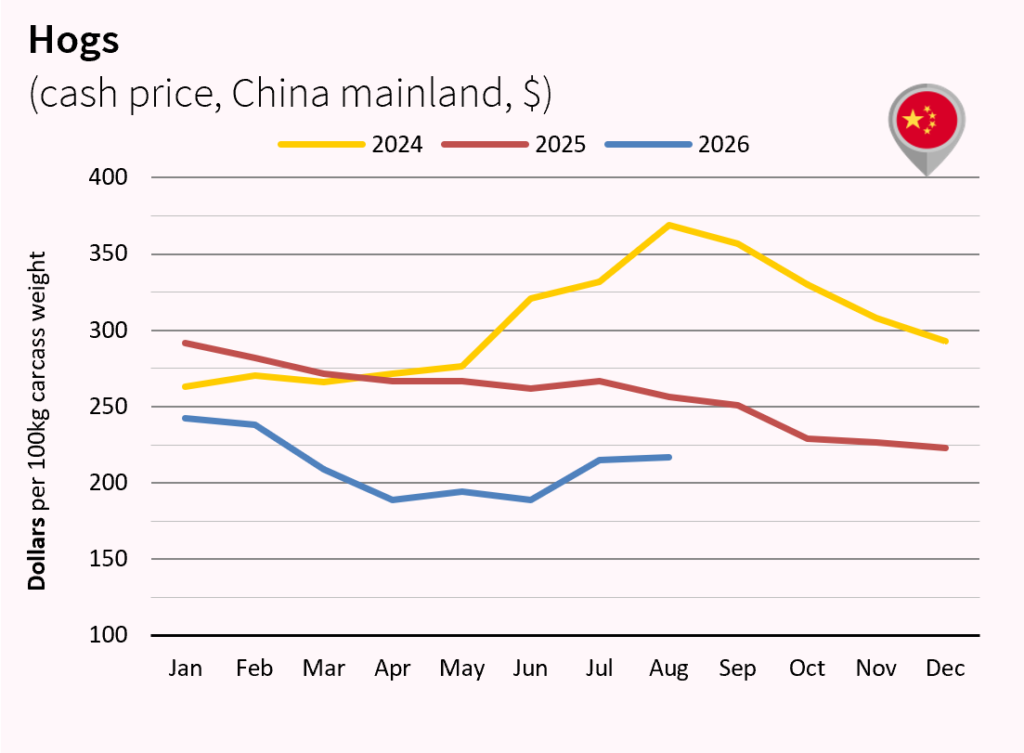
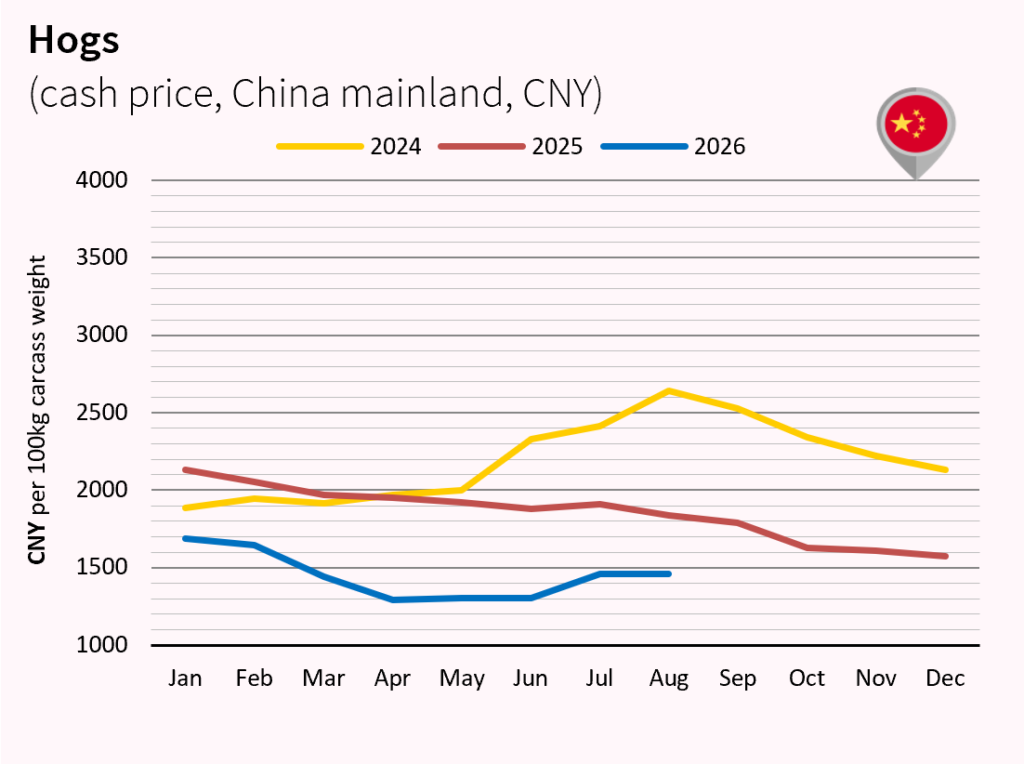
Chinese July hog prices rose about 12%, before stabilising in August. This reflected the initial impact of government measures to reduce production capacity, farmers’ reluctance to sell after prolonged losses, and adverse weather in southern China that prompted precautionary stockbuilding and temporarily tightened supplies.
At end-June, the breeding sow herd was 6.5% below its year-earlier level, confirming significant herd liquidation. However, ample pork supplies and subdued consumer demand limited both the scale and sustainability of the recovery.
Source:

Writers:
Caroline Gremillet (market data) and Elisa Husson (ABCIS, Swine Market Analysis).